Blog

  • The Role of Youths In National Development

    The Role of Youths In National Development

    Youths are like the backbones of institutions and have the propensity to change the dynamics so as to have a new paradigm shift in society. Youths are nation’s strength; their characteristic energy and capabilities support the body politic. They also form a sensitive age group that harbours dreams for important social changes. The development of nations is fully dependent on the abilities of youths. The power of youths must be positively utilized in all areas like health, education, technology, business, trade, etc. and integrated with moral value education to spread peace and welfare throughout the country.

    According to the Concise Oxford Dictionary of Current English, youths are described as the period between childhood and full manhood. It is the period between childhood and adulthood, described as the physical period and psychological development from the beginning of puberty to maturity and early adulthood. In Liberia, one is considered youth when he/she is between the ages of 15-35 years according to “The Revised National Youth Policy (2009-2017)”. Youths become dynamic in actions and play distinct roles in building a nation. This which society must see as a tool to creating a smooth developmental atmosphere in order to set the gateway to national growth and development at its altitude. Youths must have the ability to make choices that support the pursuit of educational goals and the development of life skills necessary for national and even local leadership positions.

    Ignoring maximum commitment and engagement of youths in national development today will have dire consequences. To better understand how to move the youths forward towards national development, there must be a careful examination of rationale for expanding the youths frontier for active participation in national development. If youths are greatly involved in national development, it gives a clear picture that their potentials as change agents in mostly civil society is being highly recognized. Youths have a greater space in national development that must be consciously occupied by them, for national development does not only involves the implementation of political and economic policies and action programs that will improve the lives of the ordinary citizenry, but also recognizing the values and other aspects of the state that would act as a national catalyst to bind the people.

    We as young people in this our modern social, political, economic and ethnic dispensation must work to discover our hidden talents, work out our ideas in every walk of life and set our thoughts on the parachute of development so as to build our nation. On the other hand, we must be given the necessary opportunities. We have a voice that must be given greater say and/or attention in an effort to make our contributions in the way we are governed and allow us to play greater role in national leadership and governance so that at all times, we are properly equipped to assume the mantle of authority which is inevitably on its way.

    Having an open mind of how we intend to contribute to the economic growth and development of the state is something that has been thought of over the time even before a popular regime took over. Our education is one of the key factors that have been discussed both by the old and young folks in our society. We have seen that education is a way of bringing youths to the national theater. The role of education in positioning and providing youths with access to effective engagement in national development which is a way of incorporating them in the decision making process of the nation’s governance, nation building activities where they are welcomed, with accurate and comprehensive information will empower them to make healthy decisions.

    However, the prevailing circumstances in our country have extenuated the potentials of youths as agents of social change. We have understood that these challenges range from the economic and social to cultural. The sensitivity of our youths has been greatly challenged due to their entrapment into the treacherous triangle of poverty, illiteracy and unemployment. And this is what those who studied Sociology referred to as “attitudes of fatalism, resignation and acceptance of the situation”. The persistence of these social problems has created an environment where youths are cheaply available for manipulation by self-seeking politicians. Poverty, illiteracy, sexism, and unemployment are interrelated circumstances that generate human needs and therefore constitute a state of deprivation.

    As the youth continue to remain in this state, there is a pent-up emotions and untapped energies. They provide cheap labour to execute the design of political gladiators and ethnic champions. There is an urgent need to arrest these conditions and signal society to reconsider its decision on the participation of youths in nation building. Youths are critical thinkers in society. They are the firebrand tools that drive a nation to its great path of development. Youths must be highly incorporated into national development as a whole. As we are aware that the essence of youth participation in national development is to promote ownership and sustainability of change of interventions, strengthen their abilities to meet their own subsistence need, to prevent and reduce vulnerabilities to economic, political and social unstable environment, to help them gain entry into target communities and build up trust and social capital.

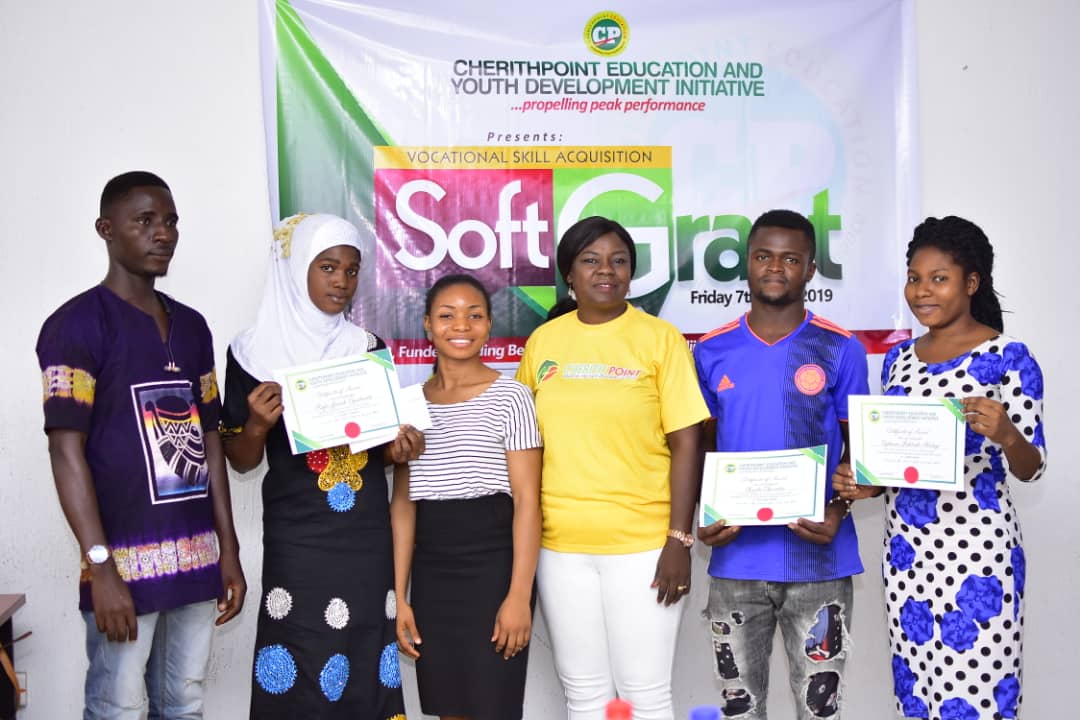
    In order for our youthful generation to achieve the above listed qualities and deny acceptance to fail our nation, there is a great need that we as a people give our youths the opportunity to develop their capacities through balanced education and exposure. To help guide them stay away from crime, we are to help them through trainings and vocational knowledge that will make them relevant as a means of getting them involved in leadership at different levels of society and not only government.
  • Nigeria’s youth are demanding a better future for all

    Nigeria’s youth are demanding a better future for all

    By 2030, half of Nigeria’s population will be under 25 years old. The future will be in their hands, and they’re already working to make it better!

    The Nigerian Government is now in no doubt about the kind of future young Nigerians want. Last month, ONE members presented a Youth Declaration with over 67,000 signatures to Vice President Professor Yemi Osinbajo, demanding that leaders invest in Nigeria’s youth.

    The Declaration outlines what matters most to them, with unemployment at the top of the list. This isn’t surprising, since around a third of 15 to 35-year-olds can’t get work or can only find low-skilled jobs. Ending corruption, improving healthcare, access to education, and investment in agriculture are also high on the list.

    “Our ask is that you fulfill your promises to young Nigerians, especially on job creation because we are losing out on so many outstanding Nigerians who are emigrating. I’ll be passing out of the National Youth Service Corps (NYSC) in a few weeks and my question is, ‘what next?’ Sadly, that’s the reality of millions of young Nigerians,” said ONE supporter Wadi Ben-Hirki to the Vice President.

    They voted for their future

    The Youth Declaration was part of the #VoteYourFuture campaign. Ahead of Nigerian elections in February 2019, young people were empowered to create the future they want to see by getting to know the issues and making their votes count.

    Tens of thousands of young people showed up at events and rallies. Determined ONE Champions, volunteers and a host of influential speakers took #VoteYourFuture on the road, leading panel discussions and debating policies across Nigeria.

    While some took #VoteYourFuture on the road, others went online. ONE partnered with TRACE, a Nigerian TV Channel, and Enough is Enough to produce a series of interviews with five of the Presidential Candidates who signed the Youth Declaration.

    Signed, sealed, delivered

    Vice President Professor Yemi Osinbajo, who received the Youth Declaration on behalf of the Government of Nigeria, promised to create more opportunities for young people in the next four years. He also encouraged youth to promote national unity irrespective of political, ethnic, or religious divides. Perhaps most importantly, he asked them to keep holding their leaders accountable!

    #VoteYourFuture sent a strong message that Nigeria’s youth are fed up with empty promises and are ready for bold changes. Now, they are determined to work with leaders to build a nation where everyone leads a life of dignity and opportunity.

  • 10 Ways to Empower Youth Leadership

    10 Ways to Empower Youth Leadership

    According to the Knight Foundation, statistics also show a gap. ‘Often that energy, that desire to contribute or lead, is going unsupported and untapped, they said.’ Teens and young adults don’t always see a place for their voice and their work.’ They feel unwelcome, perhaps a result of negative messages about youth coming from adults and even the media.

    We are running out of time to solve the climate crisis. Every day it seems more people are calling out for climate action, but still, every time global leaders meet they fail to reach binding agreements to curb greenhouse gasses.

    Youth around the world feel fear and despair when they think about what climate change could mean for their future. While this generation has the most at stake when it comes to preventing climate chaos, many young people don’t know where to start in addressing this huge issue. Many youth are looking for ways to be a part of the solution, but need the training and support to take the next step.

    In light of the issue we are facing, here is a list of 10 ways that you can start empowering your children to be positive youth leaders NOW:

    1. Give the youth tools to collaborate and problem solve, brainstorm and reflect.

    Providing youth with the information and resources necessary for analyzing issues that affect their lives and environments will help them become strong strategizers on ways to act as change agents in their communities.

    2. Encourage them to use their passions for good.

    Guiding youth to use what their passions and creativity to share positive messages or bring attention to issues they care about will allow them to find purpose within their passion and use the power of their joy to share important messages.

    3. Guide them to believe that their voice matters without judging or criticizing their ideas.

    Empowering youth to understand that their voice makes a huge difference in this world and that all ideas are worth exploring will only give them more motivation and fuel to continue strengthening their own power for change.

    4. Guide them to understand that people will not always want to listen, just because we would like them to but to not take it personally.

    Helping youth to understand that not everyone is going to respond the way you hope they would and that some people may not be ready to hear what you want to share will support their confidence. It’s important to let youth know that when someone doesn’t listen to them, allow that to only make them stronger.

    5. Help them learn that sometimes even the most fabulous idea may need a bit more logistical planning.

    Guiding youth to help them understand that all visions and ideas take time to make sure they are realistic and well thought through. Help them to know that there are different stages to a project and the first stage is having an idea but there are many stages after that. This will help them understand the full process and not get stuck on one idea.

    6. Help youth develop habits, that in the end, they can sustain without ‘suggestions’ or prodding.

    Good habits produce sustainable leaders. Youth that have good habits for their own well-being and constant personal progression that they enjoy will help them become strong leaders on their own.

    7. Give youth a chance for them to fail but help them to learn to succeed.

    Let youth know that failing is not a bad thing to happen, it’s actually important to find out what went wrong so they can improve and make it better the next time they try. Often the way to success is through failure.

    8. Employ storytelling of successful youth leadership to counteract negative messages about young people.

    Encourage youth to speak about to their triumphs often, to share their victories across all media platforms to reinforce the positive change that has occurred. This will empower more positive action to continue and give youth more foundation and support to work from.

    9. Invite the youth to launch a project or idea and support their progress.

    Support youth in implementing their project once they feel they have come up with a good strategy and support them along the way. Allowing them to carry out their vision with the encouragement and coaching support will be an empowering experience and let them feel supported in their process.

    10. Become involved with Rising Youth for a Sustainable Earth (RYSE)!

    It’s time for each of us to support the leadership of generations to come who will be most affected by the global crisis of climate change. This spring, RYSE will train and support 500 young solutionaries to lead a collaborative national movement of young people to take direct actions for climate solutions starting in their own communities. This project needs your attention and support to bring it to life.